This blog was created by using LLMs as Open.AI’s o1 and Le Chat (large model) from Mistral.AI.
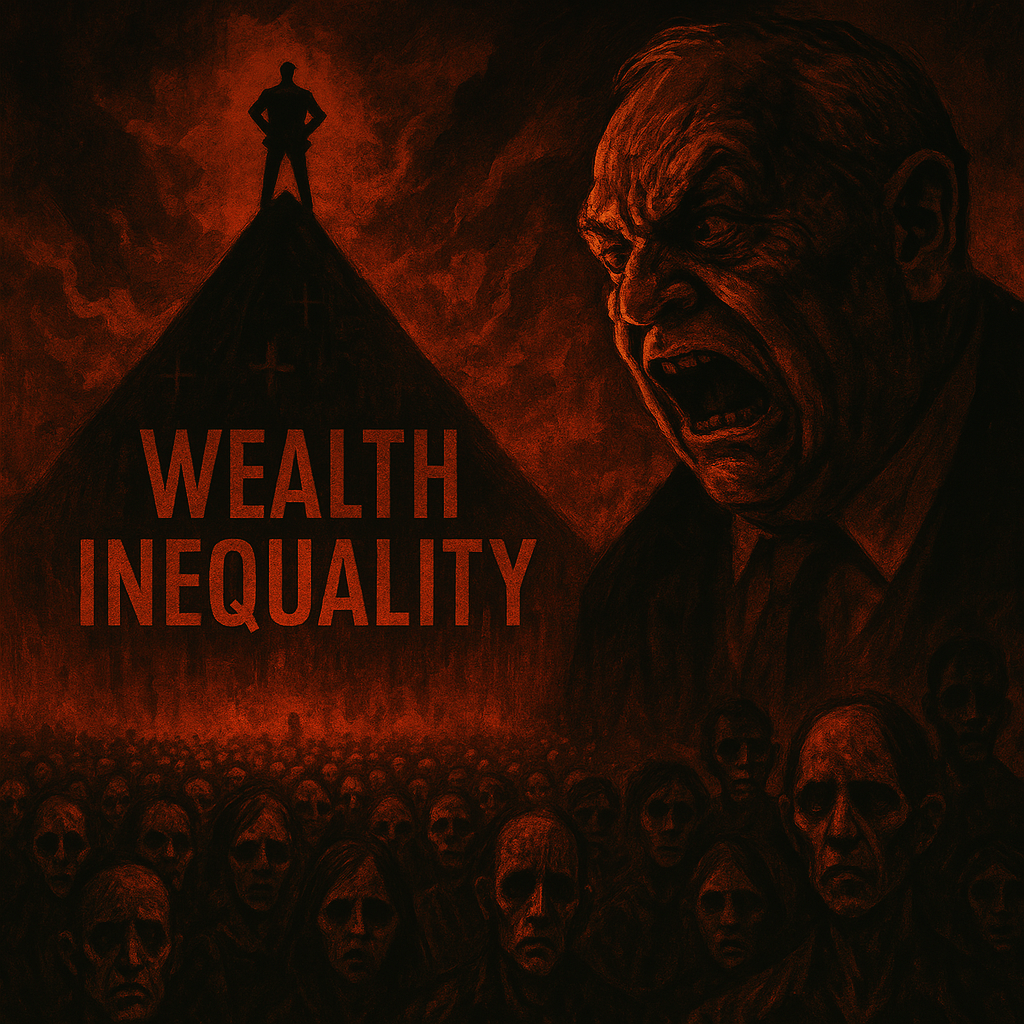
The Billionaires Problem: A Historical Perspective on Wealth Inequality
Introduction
In the history of human civilization, wealth inequality has been a persistent force, shaping societies, sparking revolutions, and influencing both economic systems and political ideologies. From the feudal hierarchies of the Middle Ages to the capitalist empires of the 19th century, the concentration of wealth in the hands of a privileged few was the norm—not the exception.
But the story does not end there.
In the 20th century, the rise of communism presented the first large-scale attempt to dismantle economic class structures entirely. Though ultimately marked by authoritarianism and inefficiencies, the communist era temporarily leveled wealth disparities within its borders—and pressured capitalist nations to reform, fearing social unrest or revolution. As a result, the post-war decades witnessed the rise of welfare states and a temporary narrowing of inequality in the West.
That balance, however, would not last.
With the collapse of the Soviet Union, the ideological counterweight to global capitalism vanished. In its place, neoliberal economics flourished, ushering in an era of deregulation, privatization, and rising inequality once more. And now, a new force has entered the stage: artificial intelligence—a tool capable of either liberating humanity or deepening the divide between the few who control it and the many who don’t.
In this volatile landscape, we also see the return of authoritarian populism. In the United States, Trump’s second administration, backed by the radical blueprint known as Project 2025, threatens to dismantle the social safety net entirely. Guided by billionaire interests and turbocharged by AI, this vision could bring inequality to levels unseen since the Gilded Age—while eroding the very foundations of democracy.
This blog post will explore the evolution of wealth inequality over the last 500 years, highlighting key events and forces—from the French Revolution to the fall of communism, from globalization to the rise of AI—that have shaped the disparities we face today.
The Middle Ages to the Renaissance (1500-1600)
- Feudal System: The Middle Ages were characterized by a feudal system, where land ownership was concentrated on the nobility. The vast majority of the population were peasants who worked the land but owned little to no property.
- Emergence of the Merchant Class: The Renaissance saw the rise of a merchant class, which began to accumulate wealth through trade and commerce. However, this wealth was still largely held by a small segment of the population.
- Economic Power: The Church and the nobility held significant economic power, controlling vast estates and resources. This concentration of wealth was maintained through political and social structures that favored the elite.
The Age of Exploration and Colonialism (1600-1800)
- Colonial Expansion: The Age of Exploration led to the colonization of the Americas, Africa, and Asia by European powers. This resulted in a massive transfer of wealth from colonized regions to Europe, further enriching the elite classes.
- Slavery and Exploitation: The transatlantic slave trade and the exploitation of indigenous populations were integral to the accumulation of wealth during this period. The profits from these activities flowed primarily to European colonizers and merchants.
- Industrial Revolution: The onset of the Industrial Revolution in the late 18th century began to shift economic power towards industrialists and capitalists. However, this also led to increased urban poverty and exploitation of labor.
The French Revolution: A Turning Point
- Challenging Inequality: The French Revolution, which began in 1789, marked a significant turning point in the history of wealth inequality. The revolution challenged the existing social and economic order, advocating for the rights of the common people against the privileges of the nobility and clergy.
- Redistribution of Wealth: The revolution led to the confiscation and redistribution of wealth from the aristocracy and the Church. This included the seizure of land and assets, which were then sold or redistributed to the peasantry and bourgeoisie.
- Social Reforms: The French Revolution introduced various social reforms aimed at reducing inequality, including the abolition of feudalism and the declaration of equal rights for all citizens. These reforms laid the groundwork for more equitable societal structures.
- Legacy: Although the French Revolution was followed by periods of political instability and eventually the rise of Napoleon, its ideals of liberty, equality, and fraternity continued to influence social and political thought across Europe and beyond.
The 19th Century: Industrialization and Inequality
- Industrial Tycoons: The 19th century saw the rise of industrial tycoons who amassed enormous fortunes through manufacturing, railroads, and finance. This period is often referred to as the Gilded Age, characterized by opulence and extreme wealth disparities.
- Labor Conditions: The working class faced harsh labor conditions, low wages, and limited rights. The gap between the wealthy industrialists and the working poor widened significantly.
- Economic Policies: Laissez-faire economic policies favored business interests and allowed for the unchecked accumulation of wealth. Government intervention was minimal, and social welfare programs were virtually non-existent.
The Turn of the 20th Century and the Lead-Up to World War I (1900-1914)
- Gilded Age: The early 20th century marked the height of the Gilded Age, with unprecedented levels of wealth concentration. The top 1% of the population controlled a significant portion of the nation’s wealth (up to 90%).
- Social Unrest: The stark inequality led to social unrest and the rise of labor movements demanding better working conditions, fair wages, and workers’ rights.
- Progressive Era: The Progressive Era began to address some of the issues related to wealth inequality through reforms aimed at regulating corporations, improving labor conditions, and implementing progressive taxation.
The period from the Middle Ages to the start of World War I was marked by extreme wealth inequality, driven by feudal systems, colonial exploitation, and industrial capitalism. The French Revolution stood as a beacon of change, challenging these disparities and advocating for a more equitable society.
https://www.vox.com/world/2017/1/23/14323760/inequality-europe-chart
The Impact of World War I on Wealth
- Widespread Destruction
World War I destroyed many factories, homes, and other property, especially in Europe. Because so much capital (things of value that generate wealth) was ruined, some of the richest people lost significant property. This destruction led to a brief period where wealth became more evenly spread out—nobody had quite as much as before. - Economic Upheaval
Governments spent huge sums on the war, which meant higher taxes and borrowing. Prices for everyday goods rose quickly (inflation), and many people saw their savings lose value. The war effort also changed the job market, with women filling roles left by soldiers and labor unions pushing for better pay and conditions.
Germany After the War: The Treaty of Versailles
- Heavy Reparations
The Treaty of Versailles forced Germany to make large payments to the Allied nations. These reparations put a massive financial load on Germany, leading to economic chaos and, eventually, an extreme rise in prices known as hyperinflation. - Hyperinflation’s Toll
When prices skyrocket at a breakneck pace (hyperinflation), money quickly loses its buying power. Middle‐class Germans saw their savings become worthless. Meanwhile, some business owners and bankers who knew how to protect themselves from inflation held on to or grew their wealth. - Social and Political Unrest
As ordinary Germans suffered, anger and desperation spread. Joblessness went up, living standards fell, and political tension grew. These troubles set the stage for the rise of extremist groups in the country.
Slow Recovery, Renewed Inequality
- Uneven Rebuilding
After World War I, Europe tried to rebuild, but progress was not the same everywhere. Some industries bounced back faster, and certain business owners managed to accumulate new fortunes. - Growing Gaps
Even though the war had briefly reduced wealth gaps by destroying capital, the postwar period saw those gaps widen again. People with resources and connections (like industrialists and financiers) could seize new chances to grow their wealth. - Government Actions
Many governments introduced policies to stabilize their economies—often through currency reform, new regulations, or social programs. Yet in places like Germany, these measures couldn’t fully reverse the effects of reparations and hyperinflation on the average person.
World War I and the Treaty of Versailles reshaped wealth in Europe, especially in Germany. War damage, massive repayments, and raging inflation erased many people’s savings, while some found ways to profit from the chaos. This led to short‐term decreases in overall wealth (because of physical destruction) but ultimately paved the way for new wealth concentration in fewer hands. Understanding this past helps us see how major crises—like wars or financial crashes—can temporarily level wealth, only for inequalities to reemerge if economic rebuilding and policies don’t support broader prosperity.
World War II (1939–1945) had a huge impact on how wealth was distributed around the world. The massive rebuilding that followed and the policies governments adopted led to a more balanced spread of wealth in many places—at least for a while.
World War II: A Great Leveler
- Massive Mobilization
Countries poured huge amounts of resources and labor into the war effort. Governments set up systems like rationing (limiting how much people could buy), imposed price controls to keep goods affordable, and raised taxes to pay for the war. - Destruction and Rebuilding
Much of Europe and Asia lay in ruins by 1945, so governments poured money into rebuilding roads, factories, and housing. This large‐scale investment boosted economic growth and spread wealth more broadly among citizens. - Progressive Taxation
To finance the war, many countries introduced or strengthened taxes on high incomes and large estates. As a result, some of the wealth from the richest households flowed toward public services and general welfare, reducing inequalities. - Expansion of Social Programs
Social welfare programs such as public healthcare, education, and unemployment benefits grew after the war. These programs helped lower poverty rates and narrowed the gap between the rich and the rest.
The Post‐War Era (1945–1970s): Rebuilding & Prosperity
- Economic Boom
Many Western nations, especially the United States, experienced a “golden age” of growth. Factories churned out consumer goods like cars and household appliances, creating jobs and fueling prosperity. - Welfare State Expansion
Governments doubled down on social programs, creating or expanding systems to support older adults, the unemployed, and low‐income families. This further helped reduce wealth gaps. - Strong Labor Market
High demand for workers combined with powerful labor unions led to higher wages, better working conditions, and job stability, especially for blue‐collar workers. - Better Education
Many countries invested in education, making it easier for people to finish high school or attend college. This opened the door to better‐paying jobs for more people and boosted social mobility.
The 1970s: An Economic Turning Point
- Economic Slowdown
After years of strong growth, economies faced a slump in the 1970s. Oil price shocks, inflation, and shifting global power dynamics created uncertainty and slowed progress. - Neoliberal Shift
Starting in the late 1970s, many governments moved toward market‐friendly (neoliberal) policies. This meant less regulation of businesses, more privatization, and lower taxes on high earners, which began to widen wealth gaps again. - Globalization Takes Hold
As the global economy became more interconnected, companies started moving production to cheaper labor markets, contributing to job losses in higher‐wage nations. Large multinational corporations gained influence, and wealth became more concentrated at the top.
In the decades following World War II, progressive taxes, social safety nets, and strong economic growth helped reduce wealth inequality for many people. However, by the 1970s, economic troubles and a shift toward freer markets began to reverse those gains. Understanding what happened during this period is essential for anyone looking to tackle wealth inequality today and shape a fairer economy for the future.
One of the lesser‐known aspects of World War II’s economic impact is that higher taxes on top earners—introduced to fund the enormous cost of the conflict—immediately started reducing wealth inequality even before peace arrived. During war, governments typically require vast resources to produce weapons, supply troops, and handle wartime logistics. To secure this funding, many countries raised taxes on the wealthiest segments of society, as well as on corporate profits. These wartime tax policies had the following effects:
- Immediate Redistribution:
Because governments needed money quickly, top earners and profitable corporations were targeted for heavier taxation, which funneled a chunk of their wealth directly into public coffers. - Reduced Concentration of Wealth:
Taking more from the richest layers of society pushed overall inequality downward, even before postwar rebuilding efforts kicked in. - Public Investment:
Wartime spending often went to factories and infrastructure—such as railroads, shipyards, and roads—that supported the war effort. While aimed at military objectives, these investments also boosted industrial expansion and job creation, aiding a broader swath of the population.
Although many people think of the greatest decline in inequality as happening after the war (through the reconstruction boom and the expansion of social programs), these higher taxation rates on wealthy individuals during the conflict itself certainly played a major role in leveling the economic playing field early on.
While higher taxation on the wealthy did reduce economic inequality, these changes pale in comparison to the staggering loss of life and horrific atrocities that took place. Over 60 million people died worldwide, and among them were the six million Jews who were systematically murdered in the Holocaust.
So actually for no one, neither rich nor poor, war should be regarded as the tool to equalize inequality.
The 1980s: Thatcherism and Reaganomics
Shift Toward Free Markets
- Margaret Thatcher (UK Prime Minister, 1979–1990): Thatcher strongly believed in free‐market principles, privatizing state‐owned industries such as British Telecom, British Gas, and British Airways. She also weakened trade unions, changed labor laws to reduce strikes, and cut social spending.
- Ronald Reagan (U.S. President, 1981–1989): Reagan advocated “Reaganomics,” which reduced taxes—particularly on high earners—while also aiming to cut certain government programs. Like Thatcher, he favored deregulation of industries (e.g., finance, air travel, telecommunications) and a general shift toward smaller government in economic affairs.
Key Policy Tools
- Tax Cuts
- Lower marginal tax rates, especially for the wealthy, were meant to stimulate investment and economic growth (the “trickle‐down” argument).
- Over time, these tax policies reduced the relative tax burden on the highest earners and shifted more tax responsibility to middle‐ and lower‐income households.
- Privatization
- Government‐owned enterprises were sold to private investors under the assumption that market forces would make them more efficient.
- While privatization did often raise government revenues in the short term, the resulting corporate profits and wealth gains tended to flow primarily to shareholders and top executives.
- Deregulation
- Deregulation reduced rules in industries like finance, energy, and telecommunications, encouraging competition but also contributing to income and wealth concentration at the top.
- In the financial sector, relaxed regulations paved the way for new investment products and mergers, increasing profitability—and pay—for those at the top of finance.
- Cuts to Social Services
- Both Thatcher’s and Reagan’s administrations aimed to curb public spending on social programs, which impacted low‐income groups disproportionately.
- Reduced social safety nets often led to widening gaps between the wealthy and the poor.
Resulting Trends in Inequality
Throughout the 1980s, data in both the UK and the U.S. show that income inequality began to rise, with the wealthiest segments of the population benefiting the most from the new policies. Middle‐class wages grew more slowly, and the erosion of unions contributed to lower bargaining power for workers, further widening the income gap.
Communism and Wealth Inequality: A Deeper Look
The Communist Promise: Ending Class Society
At its core, communism emerged as a revolutionary response to extreme inequality in capitalist societies. Inspired by Marx and Engels, the idea was to abolish private ownership of the means of production and replace markets with collective planning. The goal was clear: eliminate class divisions and distribute wealth and power more equally.
In practice, however, the results were mixed.
Wealth (and Power) Redistribution in Practice
Soviet Union (1917–1991)
- After the Bolshevik Revolution, Russia became the first state to abolish private capital and implement full central planning.
- Wealth inequality in the traditional capitalist sense was largely eliminated: no private billionaires, no stock market, no inheritance of capital.
- However, a new hierarchy emerged—the nomenklatura (party elite) had privileged access to housing, food, healthcare, and political influence.
- Economic equality often came at the cost of political repression, inefficiency, and lack of consumer goods.
Eastern Bloc and China
- Similar patterns unfolded in Eastern Europe after WWII and in China after the Communist Revolution in 1949.
- Radical land reforms and collectivization campaigns redistributed property (often violently).
- The rural elite and bourgeoisie were stripped of assets, and industrial ownership was nationalized.
- These systems flattened wealth structures, but they also concentrated power in the hands of the party, not the people.
The Hidden Form of Inequality: Privilege over Wealth
While wealth was technically equalized:
- Social capital, access to power, and insider privilege became new forms of inequality.
- For example, a party official might not “own” anything but still live in a luxurious apartment, drive a chauffeured car, and have access to special clinics and foreign goods.
This created a dual society: formally equal on paper, deeply stratified in practice, though different from capitalist inequality.
The Global Effect: Communism as a Check on Capitalism
Perhaps the most overlooked effect of communism was not just internal—but external:
The existence of the Soviet Union and communist movements worldwide pressured capitalist countries to adopt more equalizing reforms.
- Western Europe and the U.S., during the Cold War, expanded welfare states, strengthened unions, and regulated markets—not only out of economic logic but also to prevent communist revolutions at home.
- Programs like:
- Universal healthcare (e.g., the NHS in the UK),
- Public housing and pensions,
- Free higher education,
Without that ideological competition, it’s unlikely these reforms would have been as widely implemented—or maintained for so long.
The Collapse and What Followed (1989–1991)
With the fall of the Berlin Wall and the collapse of the Soviet Union, the communist alternative disappeared. This had profound consequences:
- Rapid privatization in former socialist countries led to the rise of oligarchs (Russia, Ukraine, Kazakhstan) who acquired vast public assets at bargain prices—a new era of inequality was born overnight.
- In the West, neoliberalism gained global dominance, with fewer ideological restraints:
- Deregulation,
- Tax cuts for the wealthy,
- The dismantling of social safety nets.
As inequality surged again in the 1990s and 2000s, the absence of a credible global counter-model meant capitalism no longer needed to compromise.
Today: Post-Communist Inequality and the Memory of Revolution
In the former Eastern Bloc:
- Many people feel betrayed by the promises of capitalism.
- The older generation remembers economic security, even if paired with political repression.
- Nostalgia for communism (or at least for state-provided stability) is growing, especially in Eastern Germany, Hungary, and Russia.
Globally:
- The failure of communism has been used to discredit all discussions of redistribution, even though inequality is again at historic highs.
- The current rise of authoritarian capitalism (as in China or Russia) is not about equality, but about order, nationalism, and elite control.
Conclusion: Communism’s Legacy in the Story of Inequality
While communism failed as an economic and political system, it succeeded in one important way:
It forced the capitalist world to confront inequality—and for decades, helped create a space for more balanced, socially inclusive economies.
With its collapse, that balance was lost. Since then, inequality has roared back, powered by deregulation, financialization, and now—artificial intelligence.
The question today is not whether to revive communism, but whether we can recover its core promise—a world where economic power is not hoarded by the few, but shared for the benefit of all.
End of the Soviet Union (Late 1980s to 1991)
Decline of a Command Economy
- The Soviet Union’s collapse in 1991 marked the end of a major planned economy that had existed in opposition to Western capitalism.
- Internally, the Soviet system suffered from slow economic growth, bureaucratic inefficiencies, and an inability to keep up with Western technology and consumer demands.
- Externally, growing global trade and communication made it harder for a closed, state‐controlled economy to stay competitive.
Worldwide Impact on Inequality
- Global Shift Toward Liberalization
- With the end of the Soviet Union, many Eastern Bloc countries transitioned to market economies, privatizing state assets in a process that often lacked transparency and favored a small group of insiders—leading to the rise of oligarchs in places like Russia.
- Globally, the absence of a competing ideological alternative (state socialism) reinforced the dominance of neoliberal policies, including free trade agreements and continued deregulation.
- Capital Flows and Multinationals
- Companies sought new markets in Eastern Europe, taking advantage of cheap labor and privatized industries. This sometimes meant better local job opportunities, but the profits typically accrued to foreign investors and local elites.
- Multinational corporations increasingly shifted production to wherever labor was cheapest, accelerating deindustrialization in some Western regions and contributing to wage stagnation among their former manufacturing workforces.
- Reduced Pressure for Social Welfare
- During the Cold War, some Western governments felt political pressure to maintain strong social services as a contrast to the Soviet model. Once the Soviet Union dissolved, the argument for robust welfare states as a counterpoint weakened in some political circles.
- The continued neoliberal trend in many countries reduced support for labor protections and public assistance, further heightening inequality.
Cumulative Effect on Financial Inequality
From the 1980s through the early 1990s, the twin forces of Western neoliberal reforms (Thatcher/Reagan style) and the collapse of the Soviet Union altered the global economic landscape:
- Rising Income and Wealth Disparities in the West
- Tax cuts for the wealthy, privatization, and weakening of unions helped those at the top accumulate more wealth.
- Middle‐income households faced wage stagnation and higher costs for privatized services.
- Rapid Privatization in Former Communist Countries
- A handful of individuals acquired vast assets (e.g., oil, gas, heavy industry) through flawed privatization processes, creating a new class of ultra‐wealthy “oligarchs.”
- Workers and pensioners in these regions often lost out, seeing inflation erode savings and social safety nets unravel.
- Less Global Opposition to Free‐Market Policies
- The end of the Soviet Union diminished the credibility of centrally planned economies, leaving market capitalism as the dominant model.
- This gave further impetus to deregulation, free trade, and corporate expansion, which often reinforced existing inequalities.
From the 1980s until the collapse of the Soviet Union in 1991, policies associated with Margaret Thatcher in the UK and Ronald Reagan in the U.S. emphasized free markets, privatization, and lower taxes on top incomes. These measures spurred economic changes that benefited many businesses and wealthy individuals but also contributed to rising financial inequality. Meanwhile, the fall of the Soviet Union transformed the global economic order, accelerating the spread of market‐oriented reforms worldwide and, often, enabling a rapid concentration of wealth among new and existing elites.
By the early 1990s, the stage was set for an era of globalization in which wealth gaps continued to widen in many regions, reflecting the long‐term impact of the neoliberal wave and the absence of a major competing economic ideology.
China’s Rise Under a State‐Directed Model
Historical Context
- Early Reforms (Late 1970s–1980s): After Mao Zedong’s death, Deng Xiaoping introduced market‐oriented reforms. China began opening select regions to foreign investment (Special Economic Zones) and allowed some private enterprise, while retaining strict state control over strategic industries.
- Accelerating Growth (1990s–2000s): China joined the World Trade Organization (WTO) in 2001, gaining easier access to international markets. Low labor costs, large‐scale infrastructure projects, and a state’s strategic guidance of key industries led to explosive GDP growth.
State’s Role in Economic Policy
- Infrastructure‐Led Development: The government invested massively in roads, railways, ports, and public utilities, laying the foundation for rapid industrialization.
- Support for Key Industries: China subsidized certain sectors (e.g., steel, machinery, technology) to build domestic champions, which then became global competitors.
- Control of Financial System: State‐owned banks and a regulated capital market allowed the government to guide credit into targeted projects and industries.
Impact on Inequality and Society
- Poverty Reduction: Hundreds of millions of people escaped extreme poverty, as rural areas modernized and manufacturing jobs created pathways to higher incomes.
- Urban–Rural Divide: Massive migration to cities improved incomes for many but also widened gaps between wealthy coastal cities (e.g., Shanghai, Shenzhen) and poorer inland regions.
- Rise of a Middle Class: A substantial new middle class emerged, with higher spending power and more consumer choices. Simultaneously, billionaire entrepreneurs flourished, exposing China to its own domestic inequality challenges.
Globalization’s Ongoing Influence (1990s–Present)
Pros of Globalization
- Economic Growth:
- Lower trade barriers spurred international commerce, opening up new markets for businesses.
- Countries like China, India, and Vietnam leveraged global trade to lift large segments of their populations out of poverty.
- Lower Consumer Prices:
- Offshoring production to lower‐cost regions reduced prices on electronics, clothing, and other consumer goods.
- Western consumers benefited from a broader array of cheaply produced products.
- Innovation and Technology Transfer:
- Exposure to global competition encouraged companies to innovate, improving product quality and efficiency.
- Countries that welcomed foreign direct investment (FDI) often gained expertise and advanced technology.
- Job Creation in Emerging Markets:
- New factories and service centers in developing economies offered employment opportunities where work was previously scarce or poorly paid.
Cons of Globalization
- Rising Inequality Within Countries:
- Although globalization can raise overall incomes, not everyone benefits equally. Skilled workers and capital owners often see bigger gains, while lower‐skilled labor can be left behind.
- In developed countries, many manufacturing jobs relocated to cheaper labor markets, hurting industrial communities and depressing wages.
- Job Displacement in Developed Economies:
- Industries reliant on lower‐skill labor (e.g., textiles, basic manufacturing) declined or moved offshore, leaving local workers struggling to adapt.
- Communities experienced a hollowing‐out effect, with long‐term unemployment and wage stagnation in some regions.
- Environmental Costs:
- Transporting goods across long supply chains produces carbon emissions and pollution.
- In pursuit of cost advantages, production sometimes shifts to countries with weaker environmental regulations, potentially exacerbating global warming and ecological damage.
- Uneven Power of Multinational Corporations (MNCs):
- Large corporations can leverage global supply chains to minimize labor and tax costs, concentrating profits at the top.
- Some MNCs have outsized influence on local economies and politics, potentially undermining domestic industries and small businesses.
Interplay of State Power and Global Markets
China as a Hybrid Model
- Selective Liberalization: While China embraces global trade, it imposes rules that require foreign companies to partner with local firms, transferring technology to domestic industries.
- State Influence: Beijing can quickly mobilize resources for initiatives like high‐speed rail or renewable energy; however, central control can also lead to inefficiencies or misallocation of capital.
Other Emerging Economies
- Diversification of Supply Chains: Nations like India, Vietnam, and Indonesia have begun attracting foreign investment to reduce reliance on Chinese manufacturing.
- Variations in State Role: Some governments take a hands‐off approach, while others, like India, also maintain certain protections or strategic controls over domestic industries.
Balancing Growth and Equity
- Policy Trade‐Offs: Countries seeking the benefits of globalization—like inflows of capital and technology—must weigh it against domestic social goals, such as labor protections, fair wages, and environmental sustainability.
- New Debates: The global financial crisis (2008), the COVID‐19 pandemic, and recent geopolitical tensions have sparked renewed calls for stronger state intervention and a reconsideration of hyper‐globalized supply chains.
Big Picture: Inequality in an Era of Rapid Change
- Global Poverty Decline, Local Inequalities:
- On a worldwide scale, extreme poverty is down significantly, thanks in part to China’s growth and broader economic integration. Yet within individual countries, wealth often concentrates at the top.
- Rise of Local Elites and Billionaires:
- China’s tycoons reflect how state‐guided capitalism can still produce massive personal fortunes. The same applies in other fast‐growing economies, sometimes outpacing inequality levels seen in Western nations.
- Calls for Rethinking Globalization:
- Policymakers and citizens increasingly question how to keep the benefits of global trade (like cheaper goods and economic growth) while protecting workers, reducing inequality, and safeguarding the environment.
Since the end of the Cold War, China has emerged as an alternative to Western market‐oriented capitalism, mixing government planning with global trade. This approach pulled hundreds of millions out of poverty but also created new inequalities. Meanwhile, global integration continues to have both winners and losers: multinational corporations and high‐skilled workers often benefit disproportionately, while traditional manufacturing communities and low‐skilled labor face greater challenges.
Ultimately, the question is not whether globalization will continue—it almost certainly will—but how governments can shape it to balance economic growth with equity, worker protections, and environmental sustainability. The evolution of China’s state‐directed model, alongside calls in many countries for more active government intervention, shows that a new phase of globalization could look different from the one that dominated the late 20th century.
In this period of unfolding, globalization strongly tackled by COVID-19, Ukrainian-Russian war the latest development is…
A Government Led by Billionaires and Corporate Interests
Trump’s second administration is again heavily populated by billionaires, corporate lobbyists, and industry insiders. This echoes the makeup of his first term but appears to be even more ideologically coordinated this time. The implications include:
- Policy for the wealthy, by the wealthy: Key policy decisions are often shaped by individuals who benefit directly from tax cuts, deregulation, and the shrinking of public programs.
- Corporate capture of state power: When billionaires hold office or advise those in power, the lines between public service and private gain become dangerously blurred.
Massive Tax Cuts Paired with Cuts to Social Benefits
Trump’s agenda—reinforced by Project 2025—openly proposes deep cuts to social safety nets like Social Security, Medicare, and Medicaid, along with further tax reductions for the wealthiest. This is essentially a continuation and escalation of Reagan-era “supply-side economics”:
- Tax cuts for top earners: These disproportionately benefit the already wealthy and have not been shown to “trickle down” to the rest of the population in any consistent or sustainable way.
- Budget justification for slashing benefits: Once revenues shrink due to tax cuts, deficit concerns are used to justify cutting social programs—shifting the burden to middle- and lower-income Americans.
Result: A redistribution of wealth upward—concentrating more resources in the hands of the ultrarich while dismantling support for the working and middle classes.
What Is Project 2025?
Project 2025 is a radical policy blueprint published by the conservative Heritage Foundation and supported by many in Trump’s political circle. It aims to:
- Dismantle the “administrative state”: Drastically reduce the number and power of federal agencies that regulate the economy, environment, healthcare, and education.
- Centralize executive power: Expand presidential control over government agencies and civil servants, threatening the independence of institutions.
- Privatize public services: Encourage the replacement of public programs with private-sector alternatives—often at higher costs and with less accountability.
Why it matters:
This is not just a typical policy platform—it is an attempt to restructure the state itself in ways that permanently shift power from the public to a narrow elite. If implemented, it would severely weaken democratic oversight, reduce protections for vulnerable populations, and further widen wealth inequality.
Economic and Social Consequences
a) Rising Inequality
- Wealth would become even more concentrated at the top.
- Middle-class erosion would accelerate, with fewer social protections, higher out-of-pocket costs, and stagnant wages.
b) Weakened Public Services
- Cuts to education, healthcare, and infrastructure would limit social mobility and opportunity.
- Privatization could make essential services unaffordable or inaccessible to many.
c) Political Destabilization
- As inequality rises and protections vanish, political polarization and unrest could intensify.
- Public trust in democratic institutions may erode further if governance is seen as serving only the ultrarich.
Global Signal: The Return of Authoritarian Capitalism?
In some ways, the Trump/Project 2025 vision reflects a shift away from democratic social capitalism toward a model that echoes authoritarian capitalism—where:
- The state is used to protect and enrich a ruling economic elite, not to serve the broader population.
- Public institutions are hollowed out, and democratic norms are weakened.
- Populist rhetoric is used to mask elite-serving policies, presenting tax cuts for billionaires as “pro-growth” or “anti-establishment.”
This model stands in contrast to both the European social-democratic tradition and China’s state-capitalist approach, which—despite its own issues—has used state power to drive industrial policy, reduce poverty, and invest in public infrastructure.
A Dangerous Crossroads
The Trump administration’s embrace of billionaire-driven governance and its alignment with Project 2025 represent a stark turning point for U.S. society. If this agenda succeeds, we may witness:
- A shrinking role of the public sector, especially in supporting the poor, the elderly, and the sick.
- A long-term entrenchment of inequality, with wealth and power locked up at the very top.
- A weakened democratic framework, increasingly vulnerable to authoritarian manipulation.
In this light, the “billionaires problem” isn’t just about wealth—it’s about power. The concentration of economic power is being converted into political dominance, threatening the very foundations of democratic society.
And how this collide with Artificial Intelligence which has mainly written this blog prompted by a poor middle-class intelligence who saw his father going bankrupt and managed only due to his skills to get his mother and himself out of the debts?
The New Alliance: Billionaires, Power, and Machines
In the 1980s, Reagan and Thatcher dismantled the post-war consensus: public services were cut, taxes slashed for the rich, and markets freed from regulation. Inequality began to grow again. Now, under Trump’s second administration and its ideological blueprint, Project 2025, we are witnessing a more radical phase of this transformation—one that merges state power with billionaire interests and uses AI as a key instrument of control.
Trump’s government, stocked with ultra-wealthy insiders and corporate allies, openly pushes for:
- Massive tax cuts for the richest Americans,
- Deep cuts to healthcare, education, and welfare programs,
- The dismantling of civil services and public institutions.
But what makes this moment especially dangerous is the arrival of advanced artificial intelligence—and how it is being weaponized to reshape the workforce, the public sphere, and democracy itself.
Goodbye Workers, Hello Algorithms (costly trained technical neural networks)
AI is no longer just a buzzword. It’s already replacing jobs in writing, design, law, customer service, IT, and even software development. Corporate leaders are no longer just dreaming about automating factories—they are automating knowledge workers.
What makes this trend especially ominous?
Many corporate elites no longer just want cheaper labor. They want less resistance. Less activism. Less criticism. Less “woke culture.”
AI provides a tempting solution:
- It doesn’t unionize.
- It doesn’t strike.
- It doesn’t challenge authority.
- And it can produce endless streams of content—tailored, persuasive, and soulless.
Skilled professionals who used to speak up—journalists, HR managers, educators, creatives—are now on the chopping block. Not because they’re unproductive, but because they’re inconvenient.
Project 2025: The Authoritarian Blueprint for AI-Powered Control
Project 2025 isn’t just about cutting taxes or shrinking the state—it’s about centralizing executive power, purging independent civil servants, and pushing politics hard to the right. In that framework, AI becomes more than a cost-saving tool. It becomes:
- A political filter: shaping what people see, hear, and believe through synthetic media and curated content.
- A labor control mechanism: weakening worker power and turning complex human jobs into automated tasks.
- A surveillance platform: tracking behavior, predicting dissent, and profiling individuals across borders and institutions.
All this serves a clear agenda: to undermine democracy and consolidate power into the hands of a techno-political elite.
Inequality Reimagined: The Algorithmic Divide
We’ve long understood inequality as a gap in income or wealth. But in the age of AI, inequality is also about:
- Access to algorithms (who gets replaced, who profits),
- Control of data (who is visible, who is erased),
- Narrative power (who gets to shape public opinion).
In this emerging world, AI is the amplifier of existing power—and without checks and democratic regulation, it deepens every structural divide.
What’s at Stake?
The “billionaire problem” is no longer just about private jets and offshore accounts. It’s about a handful of tech billionaires—and their political enablers—building a system where:
- Wealth is inherited, not earned.
- Labor is optional because machines do the work.
- Speech is filtered by code.
- Democracy is a shell, and real power lies in algorithms and ownership.
This is not science fiction. It’s unfolding right now.
A Different Future Is Still Possible
AI is not inherently bad. It could be used to:
- Improve education access,
- Boost medical diagnostics,
- Free people from dangerous, exhausting jobs.
But that future will not emerge on its own. It will only come if citizens demand it, governments shape it, and democratic institutions regulate it in the interest of the many—not the few.
It’s time for a new revolution—one not of machines, but of minds.
As artificial intelligence rises and billionaires tighten their grip on wealth, media, and politics, we must remember the power that still lies in natural intelligence: human solidarity, moral courage, and collective action.
Let us reclaim the future not as passive consumers of code, but as active citizens of a shared world.
Liberté. Égalité. Fraternité.
Not just for some—but for all.
Let’s fight—not with violence, but with vision and passion.
Let’s organize. Let’s educate. Let’s resist.
Let’s build a world where intelligence serves humanity—not replaces it (and dear billionaires don’t think you would be missed by this replacement).
 My blog