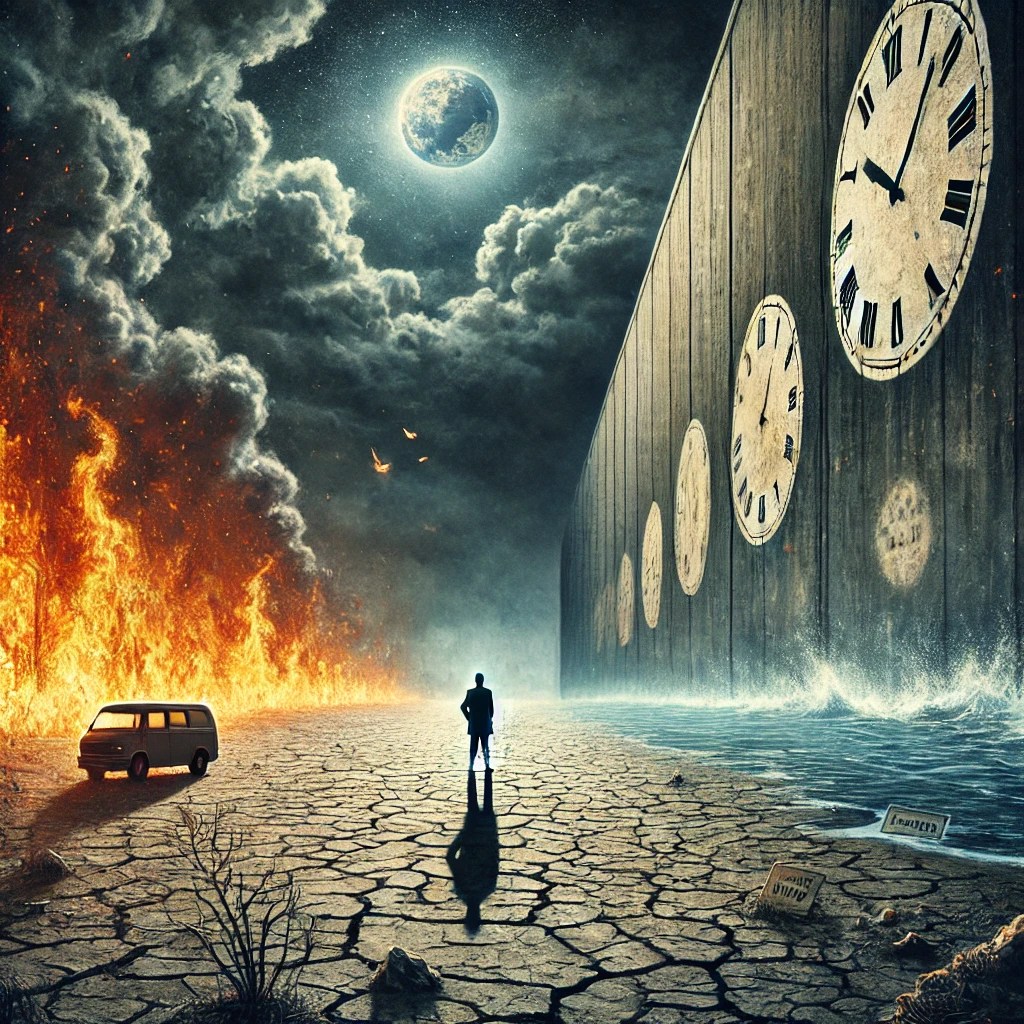
The economic and human toll of natural disasters has reached unprecedented levels lately. Yet, despite mounting evidence linking these extremes to human-induced climate change, the broader conversation in U.S. media often sidesteps this critical connection. Over just a few months, from Hurricane Helene in late November 2024 to the devastating wildfires in Los Angeles County in early 2025, the United States has endured a staggering level of destruction. The facts are undeniable: the cost of inaction and denial is becoming increasingly unbearable.
A Timeline of Destruction
Hurricane Helene made landfall in late November 2024, primarily impacting Florida and North Carolina. The storm’s ferocity resulted in:
- At least 145 fatalities across the affected regions.
- Economic damages estimated at $145 billion to $160 billion.
- Insured losses ranging from $10.5 billion to $17.5 billion.
Just weeks later, Southern California faced one of its most catastrophic wildfire events in history. By January 2025, the Los Angeles County wildfires had:
- Claimed at least 25 lives.
- Destroyed more than 12,000 structures.
- Inflicted economic damages estimated between $135 billion and $150 billion.
In total, these disasters have caused economic losses of approximately $310 billion, representing an extraordinary 1.15% of the U.S. GDP of $27 trillion in 2024.
Beyond Financials: The Human Toll
While the financial losses are staggering, they pale in comparison to the human suffering. Lives lost, communities displaced, and countless families left to rebuild amid grief and uncertainty. These disasters have disproportionately affected vulnerable populations, further highlighting the systemic inequalities that climate change exacerbates.
The Role of Human-Made Climate Change
Scientists have long warned that climate change is increasing the frequency and intensity of extreme weather events. Rising global temperatures have:
- Intensified hurricanes, increasing their rainfall, wind speeds, and destructive potential.
- Extended drought periods, leaving regions like California more vulnerable to wildfires.
- Shifted seasonal patterns, creating conditions where phenomena like Santa Ana winds overlap with historically dry seasons, fueling massive wildfires.
While natural weather patterns have always posed risks, the influence of human activities—primarily through greenhouse gas emissions—has magnified these risks to unprecedented levels.
North America’s Changing Strategic Landscape
Historically, the United States benefited from its geography, being insulated by the Atlantic and Pacific Oceans. These natural barriers offered strategic advantages and protection from many global challenges. However, in the era of climate change, this encapsulation has turned into a disadvantage. North America now faces amplified climate impacts due to its diverse geography and regional vulnerabilities:
- Hurricanes: Warm waters in the Atlantic and Gulf of Mexico intensify hurricanes, as seen with Hurricane Helene.
- Wildfires: Extended droughts and shifting seasonal patterns make the western states particularly susceptible to massive wildfires.
- Temperature Extremes: Central and northern regions experience greater temperature fluctuations, impacting agriculture and infrastructure.
In contrast, the Euro-Asian continent experiences relatively moderated effects due to its vast landmass and varied climatic zones, which can buffer some of the immediate impacts. However, no region remains untouched, and all will ultimately bear the consequences as the core problem persists.
Reflecting on the Costs
The financial and human costs of these events illustrate the broader challenges humanity faces. Transitioning to renewable energy is a necessary step, but it is not the sole solution. We, as a global society, must fundamentally reassess our relationship with nature and the universe. Our approach to consumption, development, and environmental stewardship requires profound change.
The destruction caused by Hurricane Helene and the Los Angeles County wildfires serves as a stark reminder of the interconnectedness of our actions and the planet’s response. Recognizing this relationship and adapting to it is key to mitigating future disasters and ensuring a sustainable future. However, as long as fossil fuel consumption remains the driving force, these challenges will persist and escalate.
 My blog