Text created by ChatGPT 4o:
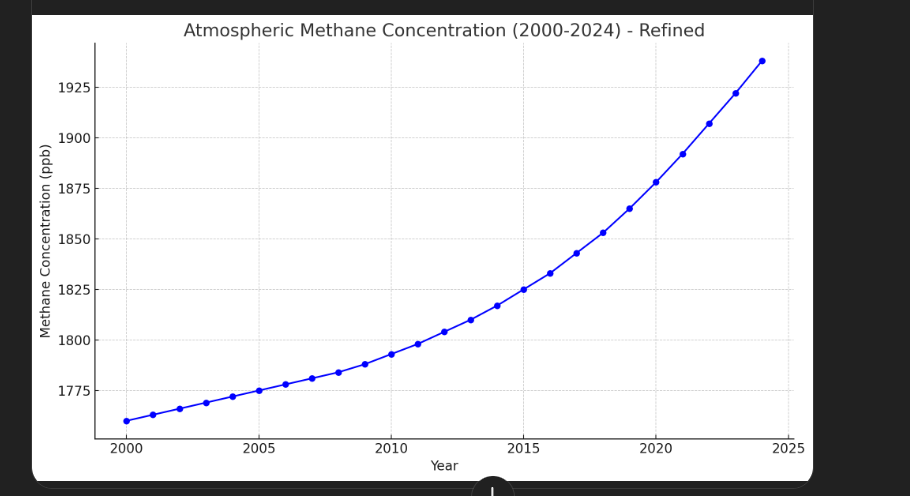
Since 2000, atmospheric methane (CH₄) concentrations have indeed shown a marked increase, with especially rapid growth since about 2007 and a notable acceleration in the past 15 years. Here’s a breakdown of the development and factors involved:
Historical Concentration Trends:
- 2000 – 2006: Methane levels were relatively stable after a long period of increase throughout the 20th century. This was partially due to improved methane management practices in some regions and perhaps natural variability.
- 2007 – 2013: Concentrations began to increase again, at around 5–6 ppb (parts per billion) annually.
- 2014 – 2021: Methane growth rates accelerated significantly, reaching over 10 ppb annually in some years. This is nearly twice the rate observed in the early 2000s, contributing to record-high atmospheric levels of over 1900 ppb.
- 2022 – Present: Methane levels continue to rise, though recent growth rates vary. The current concentrations are much higher than at any point in human history.
Key Contributing Factors:
The causes behind this recent acceleration are complex and involve both natural and human-driven processes. Some of the main contributors include:
- Microbial Methane Emissions: Natural wetlands, especially in tropical and boreal regions, are significant sources of methane. When microorganisms in wetlands, rice paddies, and other moist environments decompose organic material in anaerobic conditions, they release methane. Warmer temperatures and changing rainfall patterns may be increasing emissions from these areas.
- Agricultural Sources: Livestock, rice agriculture, and manure management all contribute methane. As agricultural practices intensify, particularly in developing regions, these emissions grow.
- Fossil Fuels: Oil and gas extraction, coal mining, and leakage from pipelines and storage facilities continue to be major sources of atmospheric methane. Improvements in detection have revealed that leaks might be more significant than previously thought.
- Thawing Permafrost: In Arctic and sub-Arctic regions, warming temperatures are melting permafrost, releasing methane stored in frozen organic material over millennia. This feedback loop could worsen as temperatures continue to rise.
Role of Microorganisms in Humid Environments
You’re correct that microorganisms in humid locations are likely a significant source of methane. When soils or waters become anoxic (oxygen-deprived), certain microbes thrive by metabolizing organic material and producing methane as a byproduct. This process is particularly active in:
- Wetlands and Flooded Soils: Warmer, wetter conditions can boost microbial activity and methane emissions.
- Rice Paddies: Managed floodwaters create ideal conditions for methane-producing microorganisms.
The rise in global temperatures and shifting precipitation patterns could be amplifying these microbial emissions.
Climate Implications
Methane is a potent greenhouse gas, with over 80 times the warming potential of CO₂ over 20 years, though it has a shorter atmospheric lifespan. Its increasing levels are concerning because it drives near-term warming, impacting ecosystems, weather patterns, and potentially triggering further greenhouse gas releases.
This upward trend in methane concentration is a significant focus of climate research, with ongoing efforts to pinpoint sources, track emission patterns, and explore strategies for reduction, such as improved wetland management and methane-capture technologies.
 My blog