Audio for ‘Story-telling and climate change’ (intro):
In this blog, I aim to revisit the complex issue of climate change. My goal is to provide a clear explanation for the extreme weather events we are witnessing and how they relate to human behavior and lifestyle. This will be a detailed exploration, so if you’re not interested in delving into the intricacies of the subject, you may choose to stop reading now, as it could cause unease or even anger. For those keen on gaining a deeper understanding, I encourage you to continue reading.
I must clarify that this blog reflects my personal understanding of climate change, and I make no academic claim to possess the ‘absolute truth‘, if such a thing even exists.
We, as humans, construct narratives—mixtures of imagination and reality—to comprehend ourselves and the world around us. This unique ability to tell stories sets us apart from other species on Earth. It empowers us to unify behind abstract concepts like money, even to the point of causing harm to one another in pursuit of it. Take, for example, the phrase ‘In God We Trust‘ printed on the one-dollar bill. No chimpanzee would ever trade a banana for a piece of paper, despite their ability to trade tangible goods.
Chimpanzees likely have a more reality-based existence; they don’t concoct stories attributing value to colored pieces of paper. Humans, on the other hand, share stories to explain the world. These stories may not always align with reality, and while we may not always agree with each narrative, we classify them in our minds to better understand ‘our’ world.
Keep this introduction in mind as I share my narrative on the phenomenon of climate change—a story that, I believe, reveals much about our collective psyche.
From water to steam, the story of the second law.
Audio for this chapter:
When discussing physics, it’s customary to begin with definitions. I’ve chosen three key terms to serve as the backbone for my narrative on climate change.
Tipping Point: Picture pushing a boulder up a hill. It demands a great deal of effort to set it in motion and keep it rolling. But once you crest the hill and start pushing it down the other side, it rapidly gains speed and becomes unstoppable.
Phase Transition: Consider boiling water. One moment it’s liquid, and then, upon reaching a certain temperature, it turns into steam. This sudden change is known as a phase transition, which in physics refers to a system changing states under specific conditions.
Irreversible: Imagine using a permanent marker to draw on paper. Once the ink settles, there’s no erasing it—it’s permanent. In the same way, ‘irreversible’ in physics describes changes that can’t be easily undone or reversed in a short time frame.
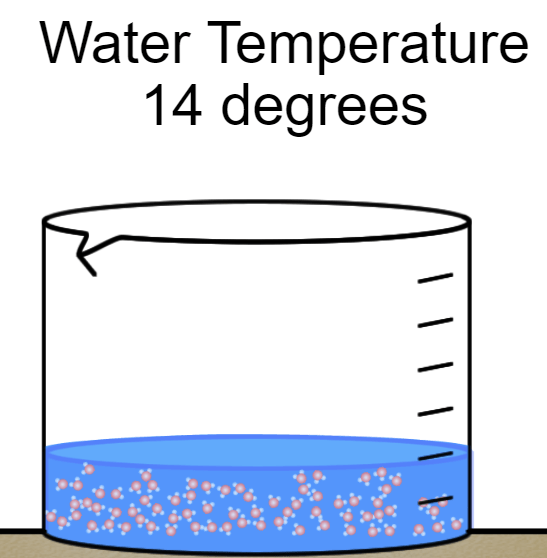
Now, let’s delve into a phenomenon we’re all familiar with: boiling water. If you’ve ever watched water boil in a glass kettle, you’ve seen this phase transition firsthand. Initially, the water appears calm and still.
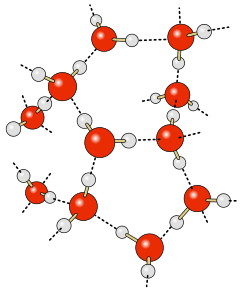
However, this is deceiving. Even at room temperature, water molecules (H2O) are engaged in structured movements. This is because H2O is an electric dipole, meaning the oxygen atom is slightly negatively charged, while the two hydrogen atoms are slightly positively charged.
You may have heard about ‘hydrogen bonds‘ in school. This term describes the electric attraction between H2O molecules. In illustrations, red ‘balls’ often represent oxygen, while white ones symbolize hydrogen atoms.
If you stretch your imagination, you might visualize a three-dimensional grid formed by these molecules. However, because water at room temperature is liquid, this grid is loosely structured. Molecules within this grid are continually coming and going, vibrating relative to each other.
But wait, we’ve overlooked something important: water isn’t just made up of H2O molecules; it also contains dissolved gases. We’ll follow up on this point shortly.
Let’s first focus on the phase transition from liquid water to steam.
When you flick the switch on your electric kettle, it might seem like nothing is happening. In reality, electric current is flowing through the heating element, warming the metal at the bottom of the kettle. This initial process is silent and invisible, known only through scientific understanding. However, after about five to ten seconds—depending on how much water you’re boiling—you’ll start to hear a noise that gradually increases in volume. What’s causing this?
The sound you hear is primarily due to the water heating up and forming steam bubbles at the bottom of the kettle. These tiny bubbles rise and collapse as they encounter cooler layers of water, creating popping or cracking sounds. As the water temperature continues to rise, the bubbles grow larger and more numerous, eventually reaching the surface and breaking open. This is why the noise gets progressively louder. Initially, these bubbles collapse beneath the surface, but as the water gets hotter, they make it all the way to the top and escape into the air.
But let’s backtrack a moment. I’ve used terms like ‘steam,’ ‘gas bubbles,’ and ‘heat,’ which may seem straightforward but warrant further explanation—and you may find the details surprising.
Air—mainly composed of oxygen and nitrogen—is dissolved in water. The warmer the water, the less gas it can hold in solution. This is why you see gas bubbles increasingly escaping from the water as it heats up. In essence, the gas is fleeing the water, and the sound of the collapsing steam bubbles is amplified by the kettle’s glass body, acting as a resonating chamber.
Now, what exactly do we mean by ‘temperature‘? It’s a term everyone knows and uses, but its physical meaning is a bit more complex than you might think.
In essence, temperature is a measure of speed—but not in the way you might be used to thinking about it. Specifically, it measures the average kinetic energy of the water molecules in your kettle. And this kinetic energy is closely related to the speed at which these molecules are moving. The faster the molecules move, the higher the temperature you’ll measure.
But now a question naturally ‘bubbles up’: Why do the water molecules suddenly move faster? You might argue that it’s because the metal plate at the bottom of the kettle heats up due to its electrical resistance. And after all, we understand that heat correlates with increased molecular movement. That’s true, but how does the heat from the metal plate reach all the water molecules suspended above it? Where is the connection? Let’s delve deeper to understand this process.
The heat from the metal plate at the bottom of the kettle is transferred through electromagnetic radiation. When current circulates through the plate, the atoms within the metal crystal structure start to vibrate. Accompanying these vibrations are the electrons, which occupy almost all the space around atoms. These vibrations induce electromagnetic waves. And now we come to a challenging part of the explanation.
We commonly think that a wave carries its energy perpendicular to its oscillating plane, and the intensity of the wave depends on its amplitude. An amplitude can range from a minuscule value to an extraordinarily high one. A water wave with an amplitude of just a few centimeters won’t impress you much, but a giant wave certainly will.
Electromagnetic waves behave quite differently compared to water waves—so differently, in fact, that physicist Max Planck was stumped in 1900. He could only theoretically explain the black body radiation profile by positing that the energy carried within an electromagnetic wave was discrete, not continuous. He referred to these discrete ‘chunks‘ of energy as ‘quanta,’ unwittingly creating a new branch of physics: quantum mechanics.
Quantum mechanics defies our intuitive understanding and suggests that many things work quite differently than we commonly think.
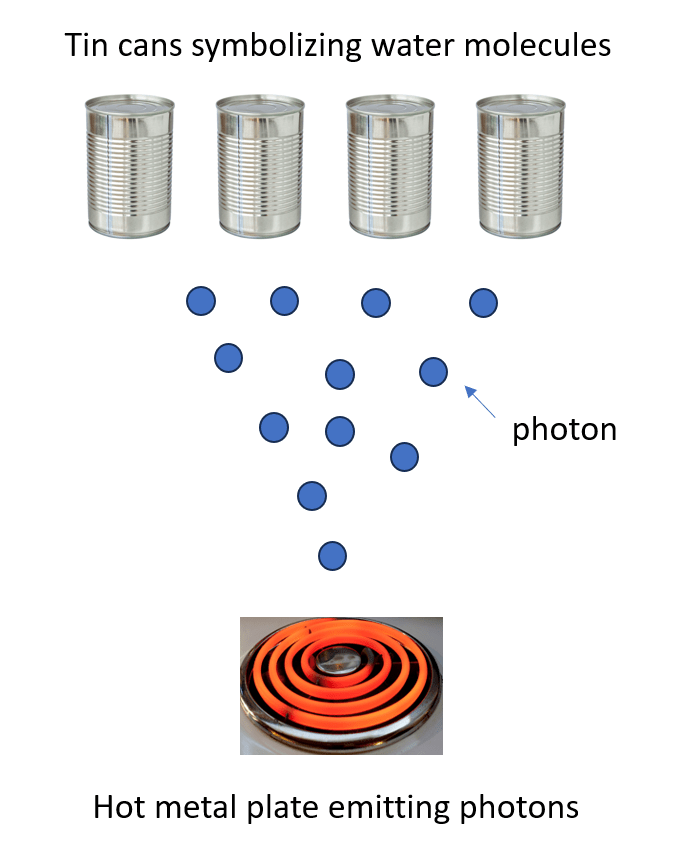
For our current discussion, however, understanding quantum mechanics simplifies our explanation of how the heat from the metal plate gets transferred to the water molecules above it (the energy ‘quanta’ are also called photons):
In our simplified model, imagine the hot metal plate firing photons like solid balls aimed at tin cans, which represent water molecules. When these ‘balls’ hit the ‘tin cans,’ they set them in motion—much like delivering a mechanical impulse. However, in the actual boiling process, it’s not a mechanical impulse that propels the water molecules; rather, the energy transfer occurs through particle exchange.
During the boiling process, the photons interact with electrons within the water molecules. In our model, the photons in an electromagnetic wave target these electrons rather than the atomic nucleus because electrons occupy a much larger volume around the atom’s core. Also, the atomic cores are so ‘heavy’ that they essentially ignore the impact of photons. Imagine if the balls in our tin can analogy were made of lightweight plastic and the tins were made of heavy, sturdy steel. No matter how many plastic balls you throw, those steel cans wouldn’t budge.
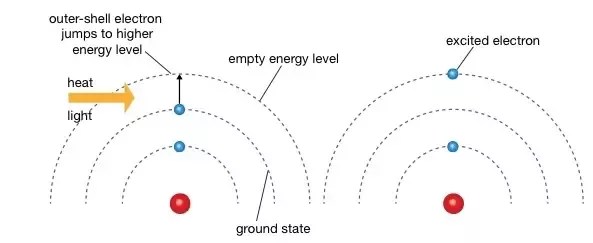
However, in reality, the energy levels of photons emitted from a heated metal plate closely match the energy levels of the outer electrons of water molecules, facilitating a robust interaction between the two.
The diagram above illustrates how a photon transfers its energy to an electron orbiting an atomic nucleus. By absorbing the photon’s energy, the electron moves to a higher energy orbit. Yet, this heightened state is short-lived. The electron soon returns to its original orbit, emitting a photon with the same energy it had absorbed. This emitted photon then interacts with an electron in another water molecule, setting off a chain reaction. The water molecules’ motion is instigated because the electrons, by shifting their energy levels within the molecules, alter the surrounding electromagnetic field. This change then influences neighboring water molecules, which, being electric dipoles, are pushed and pulled into coordinated motion.
Now that we have delved into the intricacies of water evaporation, let’s explore why it takes time for your kettle to boil dry when you put, say, 0.5 liters of water into it.
You could dramatically expedite this process and tip the scales in favor of rapid vaporization by hypothetically adding half a teaspoon of sugar to the boiling water. While I wouldn’t recommend doing this in practice, the addition serves as a tipping point, accelerating the transition from water to steam. The sugar granules act as what we call ‘nucleation sites,’ providing steam bubbles the kick-start they need to form, even when the water is already hot enough.
Finally, when all the water in the kettle has evaporated, it’s best to turn off the appliance. Let’s assume the kettle was in a kitchen with the doors and windows firmly shut. The water molecules haven’t disappeared; they’re now part of the ambient air. Can we retrieve them in liquid form?
The laws of thermodynamics offer answers. The first law, the principle of energy conservation, asserts that energy in a closed system merely transforms from one form to another. In our example, electrical energy heats the water and transforms it into steam, raising the room temperature. While you could cool the room using the same amount of energy, you won’t refill your kettle with water. At most, you’d find a thin layer of condensation on the kitchen window. Does this violate the first law of thermodynamics?
No, the resolution lies in the second law of thermodynamics, which speaks to the rise in entropy. Simply put, natural processes trend from a state of order to disorder. In our case, there’s no necessity for the freed water molecules to reconvene in the kettle; they can disperse throughout the kitchen. This comes down to probability. Just as four sheets of paper dropped from a height will most likely scatter across a room, so too will water molecules disperse, rather than converging in your kettle.
In summary, the water in our kettle evaporates irreversibly, largely governed by laws that not only dictate physical processes but also give time an ‘undisputable‘ direction.
From droplets to the cultural ‘fluid’.
Audio for this chapter:
Now my narrative truly begins, and while it veers more into the realm of imagination, it remains grounded in some harsh, inconvenient truths.
In this allegory, we humans are akin to H2O molecules. We are on the cusp of an irreversible phase transition, mirroring the immutable laws of thermodynamics.
The notion may not be heartwarming, but allow me to elucidate why I believe humanity’s golden era may conclude much sooner than we’d like or anticipate.
Remarkably, in our early history, we humans had about as much impact on this planet as a few stray molecules of water vapor or scattered droplets. Homo sapiens emerged approximately 300,000 years ago, a fact supported by both fossil records and DNA studies.
However, between 10,000 and 12,000 years ago, we transitioned into a more interdependent and concentrated ‘fluid.’ This epochal shift, often called the Neolithic Revolution, marked our transition from nomadic hunter-gatherers to settled agriculturalists. This was a tipping point that led to more elaborate social structures, labor specialization, and eventually, civilizations.
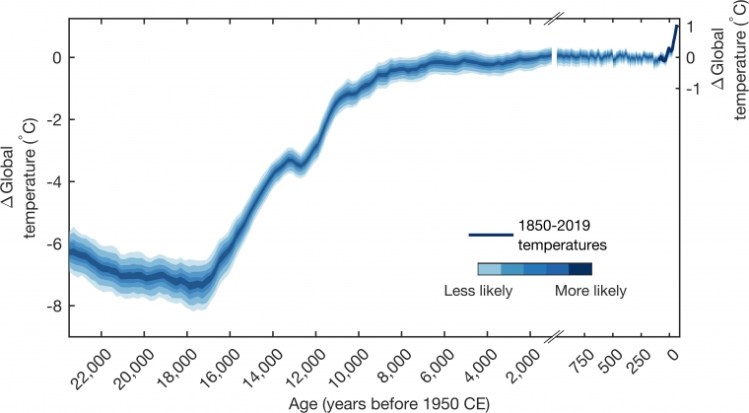
Coincidentally, or perhaps not, this period—known as the Holocene—experienced extraordinarily stable global average temperatures, which eventually yielded to the Anthropocene. It’s plausible that this climatic stability fostered the growth of permanent settlements and, subsequently, more intricate societies, technologies, and governance systems. But to state it clearly, we left the period of Holocene and the Anthropocene is an era of rapid global temperature change.
In my analogy, this shift from a nomadic to a settled lifestyle is akin to the transition from gas to liquid. In a liquid state, water molecules are connected by hydrogen bonds, allowing for some structure while still permitting freedom of movement. Unfortunately, in human history, this ‘come and go’ has often resulted in conflict. But what might be the ‘hydrogen bonds’ among humans?
The answer, reiterated for emphasis, is storytelling. It’s the glue that binds us, whether we appreciate the narrative or not. This practice predates even our sedentary history.
The Chauvet Cave paintings in Southern France date back to 30,000-32,000 years ago, a time when Earth was still in the grips of an Ice Age. This art bears testimony to the adaptability and resilience of early humans. Not only did they survive under extreme conditions, but they also produced art and likely engaged in complex cultural practices.
AI researchers and Large Language Modeler will enlighten state that intelligent multi modality already appeared 30,000 years ago and even more.
However, will our historically proven resilience and adaptability suffice in the face of modern crises? That remains to be seen.
Remarkably, global temperatures during the time of the Chauvet Cave painters were seven degrees colder than in the Holocene and eight degrees colder than today’s Anthropocene era.
(This little spike on the right-hand side that makes us ‘trouble’ today, and I come back to this later.)
The bottom line of this narrative segment is that humanity’s storytelling capabilities have propelled us into an era of written laws, religions, monetized economies, education, and philosophical endeavors. It’s a wondrous success story.
Returning to my initial metaphor of water transitioning from liquid to vapor, we must now discuss the unsettling shifts in this ‘cultural fluid’ of human societies. We’ve reached several inflection points in the past ten millennia, but now we might be facing a major downturn.
The industrial revolution kick-starts the bubbling
Audio for this chapter:
To transition from a fluid to a gas, you require energy. In our water boiler example, electric currents cause vibrations within the metal crystals, generating photons that heat the water until it evaporates into steam.
So, what energy sources did humans primarily rely on until the 18th century?
Muscle Power: Human and animal labor served as the most rudimentary form of energy, deployed in transportation, agriculture, and manual labor.
Wood: This natural resource was indispensable for heating, cooking, and even rudimentary industrial processes like smelting.
Wind and Water: Through the use of windmills and water wheels, these natural forces were converted into mechanical energy to perform tasks such as grinding grain or pumping water.
Solar Energy: While not harnessed in the modern sense, the sun’s rays were employed for tasks like drying clothes and food.
Biofuels: Some cultures utilized oils from plants and animals for lighting and other applications.
By the 18th century, Britain faced both an economic and ecological crisis. A seafaring nation’s success led to an acute shortage of wood, a vital resource for shipbuilding and heating. With increasing deforestation and rising populations, the British Isles grappled with resource scarcity.
What can you do in such a situation? Clever guys on the British islands (re-)discovered the coal which laid at that time even on the surface ground. I say rediscovered because actually the Romans discovered the coal on the British islands, but at that time there was no business case for using coal, else maybe the Roman Empire still would exist.
However, another challenge soon emerged. As the demand for coal grew, miners had to dig deeper, encountering groundwater that flooded the mines. Two options presented themselves: manually remove the water or pump it out.
This leads us back to our central theme—the evaporation of water. Thomas Newcomen designed one of the first practical steam engines to pump groundwater out of coal mines. His engine utilized steam to drive a piston, which, in turn, operated a pump to remove the water.
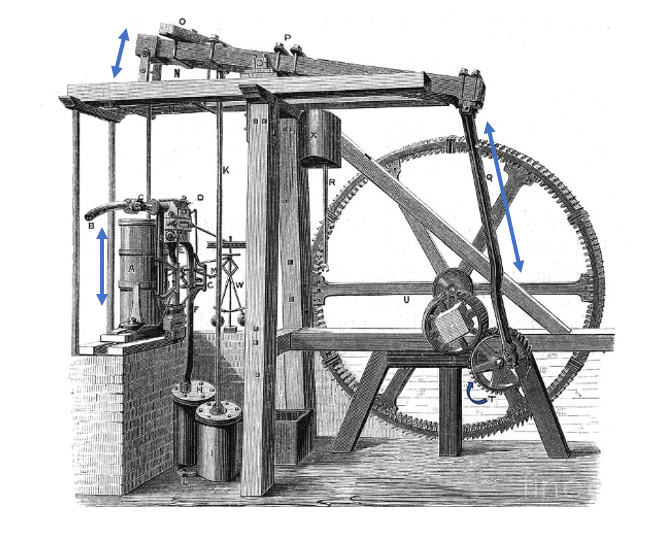
Although revolutionary, Newcomen’s engine was not efficient by modern standards. James Watt’s subsequent modifications, such as the separate condenser, significantly enhanced the steam engine’s efficiency. This innovation paved the way for its use in a multitude of industrial applications, serving as a linchpin of the Industrial Revolution.
Let’s delve into the mechanics of this remarkable invention. The steam engine consists of a cylinder where steam propels a piston upward. Upon steam expansion and cooling, the piston descends. This vertical movement is converted into rotational motion through a system of joints and gears.
Take a moment to appreciate what these foundational concepts, pioneered by Watt, set into motion. These were the initial bubbles, the nascent signs of a system on the verge of transformative change.
To be fair, such carefully constructed machinery doesn’t appear only because there is a severe need, but it was as well the result of genius inside into nature’s laws by Newton. Who realized that mass times acceleration creates a force, on which a reaction with the same force in the opposite direction keeps the balance. Or that you apply work from an energy resource in case you use force along your pathway. And Newton himself said that he could create only his groundbreaking laws of nature because he himself stood on the shoulders of giants like Galileo, Kepler and Copernicus.
All this heavy lifting of countless generations culminated in this machine and kick-started many more ‘bubbles’.
That meant that suddenly ships pushed their sails overboard and instead put a heavy steam engine in, and in the countryside everywhere, railways were installed to make a ride with the new locomotive. But it didn’t take long there the wish came up to go everywhere on land with a motor vehicle without the need of creating a railway line. At first successful about this idea were Daimler and Benz, later Diesel with their combustion engine. It used internal combustion of fuel, typically gasoline, to generate power, making it more energy-dense and efficient compared to Watt’s and Newcomen’s steam engine that relied on external combustion of coal to create steam. The internal combustion engine was also smaller, lighter, and more versatile, allowing it to be easily integrated into mobile applications like automobiles. In contrast, Watt’s steam engine was generally larger, less efficient, and better suited for stationary industrial uses like powering factories or pumping water.
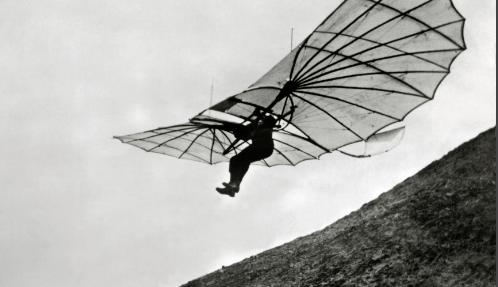
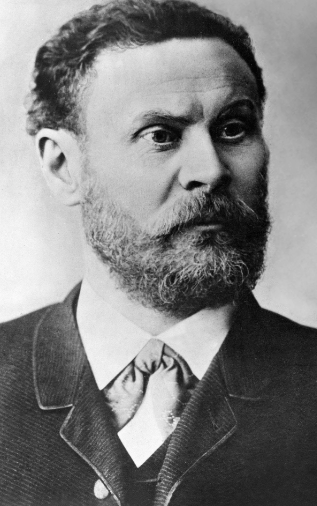
Another track at the end of the 19th century was written by Otto Lilienthal, a German aviation pioneer who lived from 1848 to 1896. What were his contributions to the human’s dream, that we can fly?
Aerodynamic Principles: He was one of the first to approach human flight from a scientific perspective, studying the principles of aerodynamics to create wing shapes that could sustain flight. Lilienthal’s work on airfoil shapes is still relevant to modern aerodynamics.
Controlled Flights: Unlike many of his contemporaries, Lilienthal’s flights were controlled. He was able to steer by shifting his body weight, providing early evidence that controlled flight was possible.
Public Awareness: His flights were highly publicized and witnessed by many, including influential figures in the field of aviation. His work inspired future aviators, including the Wright Brothers, who acknowledged Lilienthal’s influence on their own developments in powered flight.
Flight Data and Documentation: Lilienthal meticulously documented his flights, publishing his findings in articles and books. His book “Bird flight as the Basis of Aviation” laid out his observations and theories and remains a seminal work in the field of aerodynamics.
Safety and Testing: Although he ultimately died in a glider crash, Lilienthal was cautious and methodical in his approach to flying, which was relatively safer compared to the more reckless experimentation by others at that time. His unfortunate accident served as a stark reminder of the risks involved in flight testing and led to further safety considerations in aviation experiments.
Inspiration for Future Generations: His work and dramatic photographs of his gliders in action captured the public imagination and inspired a generation of aviators, engineers, and scientists to study flight.
But we should not forget that his genius work founded on the understanding of Daniel Bernoulli, who had established his principle in 1738, which is foundational to fluid dynamics and explains, among other things, how air pressure varies with speed. By Lilienthal’s time, Bernoulli’s principles were widely known, at least within scientific and engineering circles.
We can fly…
Otto Lilienthal (1848-1896)
Needless to say that the brothers Wright combined Daimler’s and Benz combustion engine with the ideas of Lilienthal for their first motor flight:
At the beginning of the 20th century, all earth spheres water, ground and air got in motion with humans. The number and size of bubbles increased rapidly.
Needless to tell, either, that the steam engine had something to do with personalities like Faraday, Maxwell or Tesla (no, I don’t mean Elon Musk).
The evolution of the steam engine and the advent of the Industrial Revolution set the stage for a renewed focus on scientific inquiry and technological innovation. This created an intellectual atmosphere that encouraged groundbreaking work in various fields, including electricity.
Michael Faraday’s pioneering work on electromagnetism was instrumental in understanding the link between electricity and magnetism, laying the groundwork for the electrical revolution that followed. His discoveries were mathematical formalized by James Clerk Maxwell, who formulated Maxwell’s equations that predicted the existence of electromagnetic waves, a foundational concept for much of modern technology.
Nikola Tesla, influenced by these scientific milestones, contributed with inventions like the alternating current (AC) system, which allowed for more efficient and long-distance transmission of electricity. Tesla was working in a world already transformed by the steam engine—industries were booming and there was a strong demand for new forms of energy and ways to harness it.
I leave now completely aside the most terrible effects of this ‘bubbling’, like two worldwars, atomic bombs and the industrial murdering of European Jews by Nazi Germans. I don’t want to discuss either the very positive effects like abolishing slavery, health care, social and cultural innovation that very, very unlikely had been achieved in that extent and scale without coal and steam engine, and they really would be worth mentioning in depth, but I leave it.
Where are we standing now, 270 years later?
Audio for this chapter:
I am pretty confident that people in 1780 when watching joints and gears of Watt’s engines moving automatically without human force, they understood independently how well-educated they were that something fundamentally would change within their lifetime and future generations to come. How exactly the change would look like they had no clue, but today we know.
Though, we are in the same position today! We ‘stand’ in front of artificial intelligence, knowing that it will dramatically change our co-existence but how it will unfold exactly we are clueless like the people in 1780.
But there is another problem which was not intended by any mean and by anyone: The climate change due to reckless and addicted use of the energy resolved from fossil fuels.
But why the use of fossil fuels was so reckless, were we only idiots? I would partially say yes, but of course, it has also much to do with nature. Nature grows if energy is ‘fueled’ into the system, then the magic of non-linear, exponential effects appear.
What do I mean by this? If you check how many innovations since 1900 were made for using energy rather than producing energy, then the split is clear. More than 90 percent of innovations utilized more energy. It’s simply much easier to think of using rather than producing energy. And apart from use of peaceful atomic energy, no significant focus on any other alternative energy source was done until late of the 90ties in last century.
But to break my picture, we are, of course, not only H2O molecules we have consciousness and intelligence. We can work against the second law of thermodynamics and order and regulate systems. Every day when you tidy up your room, you decrease the entropy. Ok, it might look after a while like you had done nothing, but we can keep order.
In terms of climate change, it means that we must transit to renewables, effective storage and smart grids as soon as possible. Limitation is given by the metals wind power turbines and solar panels require. We are mainly talking about these metals:
Metal/Material
Wind Turbines
Solar Panels
Copper
✓
✓
Aluminum
✓
✓
Steel
✓
Silicon
✓
Neodymium
✓
Dysprosium
✓
Silver
✓
Zinc
✓
Tellurium
✓
Cadmium
✓
Indium
✓
Molybdenum
✓
Gallium
✓
Iron
✓
Commonly needed metals for wind turbines and solar panels.
We have currently not enough of these metals available (in stock) to manage the transition to renewables completely, but the material is there in the earth’s crust. We must increase exploring them, which comes to costs we should not “undermine” but not overstate either:
The availability and ecological impact of mining these metals can vary significantly. While some of these metals are relatively abundant in the Earth’s crust and can be extracted with minimal impact, others are rarer and their extraction can lead to significant environmental degradation.
For example:
Aluminum and iron are quite abundant and usually don’t pose significant ecological risks when mined, assuming responsible practices.
Copper is also relatively abundant, but its extraction can be more ecologically damaging.
Rare earth metals like neodymium and dysprosium are less common, and their extraction often comes with significant environmental challenges, including the release of hazardous chemicals.
Indium and tellurium are less abundant and are often byproducts of the mining of other metals, which means their environmental impact is partly tied to the mining practices of those primary metals.
Applying recycling, you can substantially mitigate the ecological impact of metal extraction for wind turbines and solar panels. By reusing metals, the need for new mining can be reduced, which in turn lessens the environmental degradation and energy consumption associated with extracting and processing these materials from ore. Additionally, recycling can often be accomplished with a lower energy input compared to initial extraction and refining, offering a further environmental benefit.
Unfortunately, again a but, there are challenges to recycling some of these specialized metals used in renewable energy technologies. For instance, disassembling complex components to get to the valuable metals can be labor-intensive and costly. Plus, not all metals can be recycled with current technologies, and the recycling process itself can sometimes have environmental costs if not managed responsibly. For a detailed analysis on this matter, I recommend the following video:
Ask Adam, very nice video about the history of the fossil fuel era and how to counter climate change
And for solar panels it even looks that there is a door opening allowing to produce solar panels with almost double efficiency and much less environmental impact. Please look this matter up by searching for the keyword: Perovskite solar technology.
However, in a fossil fuel-based energy system, the primary resource (oil, coal, natural gas) is consumed and transformed into a less useful form of matter and energy (primarily CO2 and heat), in accordance with the second law of thermodynamics. This transformation is essentially irreversible on human time scales, especially given current technology.
With renewable energy sources, you have an energy source available as long our sun will shine, so round about 5 billion years. Until then, we should have created ‘our’ star track ship Enterprise to find a new location. And we can reuse some of the resources brought in. All of this improves efficiency.
The OECD Report about the Tipping-points of earth’s ecosystem.
Audio to this chapter:
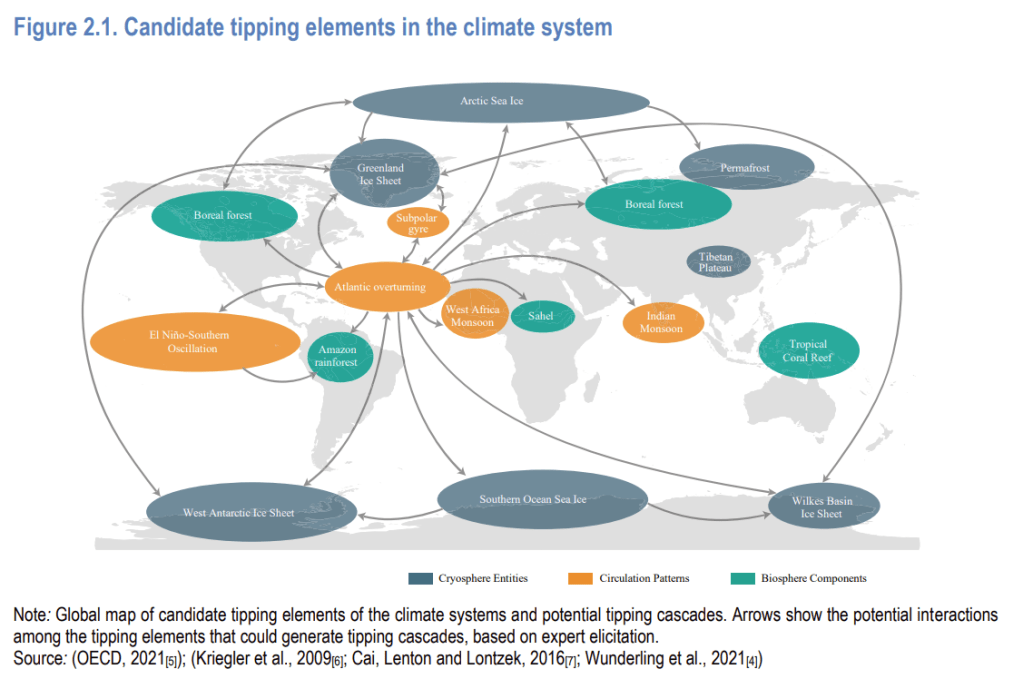
If I come back now to my allegory of boiling water. We have reached the water temperature of 90 degrees Celsius. Steam is already evaporating, and the bubbles are numerous and rather big. As we remember, we can tip such a situation by adding some sugar grains to the fluid. Take a look at these bubbles, which in our context serve as nucleation sites for tipping the earth’s ecosystem:
This diagram is taken from the OECD report “Climate Tipping Points” with the subtitle: INSIGHTS FOR EFFECTIVE POLICY ACTION, published in 2022.
Circulation Patterns (orange bubbles) = big ocean flows
Biosphere Components (green bubbles) = big forests and corals
Since the climate sub systems are very hard to read in the diagram above, here they are listed in a table and ordered from north to south:
Tipping Element
Climate Sub-System
Brief Description
Arctic Sea Ice
Cryosphere Entities
Melting polar ice caps
Greenland Ice Sheet
Cryosphere Entities
Large glacial ice sheet
Boreal Forest (Canada)
Biosphere Components
Northern Canadian forest
Boreal Forest (Russia)
Biosphere Components
Northern Russian forest
Permafrost (Siberia)
Cryosphere Entities
Frozen soil in Siberia
Subpolar Gyre
Circulation Patterns
Oceanic water circulation
Atlantic Overturning
Circulation Patterns
Ocean current system
Tibetan Plateau
Cryosphere Entities
High-altitude ice plateau
El Niño Southern Oscillation
Circulation Patterns
Climate variability phenomenon
Amazon Rainforest
Biosphere Components
Largest tropical rainforest
West African Monsoon
Circulation Patterns
Seasonal African rains
Sahel
Circulation Patterns
Transition zone in Africa
Indian Monsoon
Circulation Patterns
Seasonal winds in India
Tropical Coral Reef
Biosphere Components
Marine ecosystems
West Antarctic Ice Sheet
Cryosphere Entities
Antarctic glacial ice
Southern Ocean Ice Sheet
Cryosphere Entities
Antarctic sea ice
Wilkes Basin Ice Sheet
Cryosphere Entities
Eastern Antarctic ice sheet
Tipping elements identified in OECD document: Climate Tipping Points, Insights for effective policy action.
Who is the OECD?
The OECD, or the Organization for Economic Co-operation and Development, is an international organization founded in 1961 to stimulate economic progress and world trade. It provides a forum for governments to collaborate and coordinate policies, discuss issues of mutual concern, and work together to address pressing challenges.
The OECD is known for its comprehensive statistical data, policy reports, and standards on a wide range of topics, including economics, education, health, the environment, and social issues. It has 38 member countries, primarily from the developed world, although it also engages with non-member countries and other stakeholders.
So, by far, the OECD is not an environmental group. Its main focus is still the economic development of the group members.
What does this report, published in 2022, have to say about in the table mentioned tipping elements? Now the real unpleasant part of the story bubbles up:
Key Tipping Points Identified (Page 10, 20)
West Antarctic and Greenland Ice Sheets: The collapse of these ice sheets could lead to significant sea-level rise.
Arctic Permafrost: Melting of the permafrost could release large amounts of methane, a potent greenhouse gas.
Atlantic Meridional Overturning Circulation: A collapse could drastically affect weather patterns and ocean currents.
Amazon Forest: Dieback of the Amazon could have severe implications for global carbon cycles and biodiversity.
Coral Reefs: Destruction of coral reefs would impact marine biodiversity and fisheries.
The document also emphasizes that these tipping points can have cascading impacts, affecting both human and natural systems in ways that are difficult to predict.
We go now one by one over the critical climate sub systems.
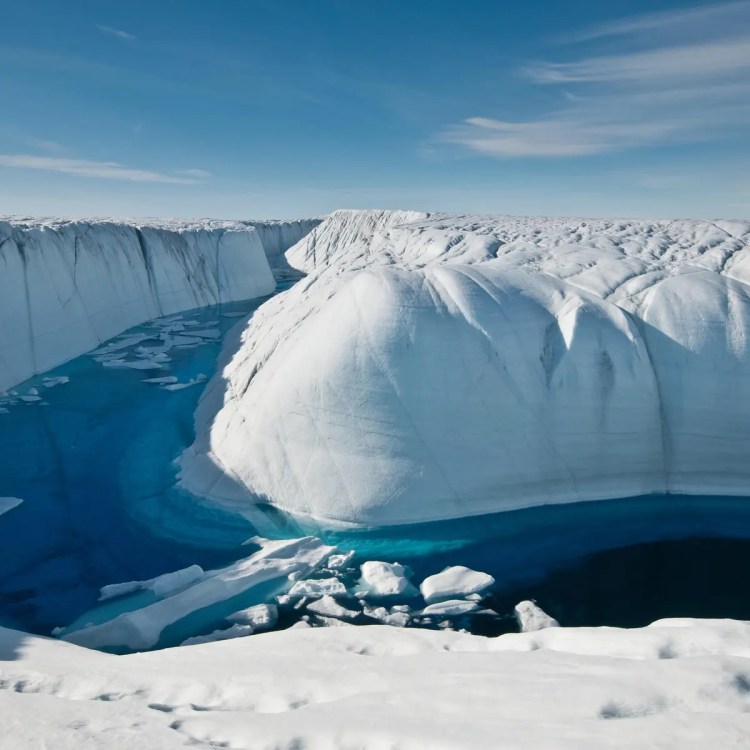
The document provides detailed information on the potential collapse of the West Antarctic and Greenland Ice Sheets, which are considered critical tipping elements in the climate system. Here are some key points:
Greenland Ice Sheet (Page 36, 37)
Critical Temperature Thresholds: Different models suggest that the critical temperature thresholds for a collapse of the Greenland ice sheet range from 1.5°C to 2.7°C. The most recent assessment gives 1.5°C as a central estimate.
Mass Loss: Between 1992 and 2020, the Greenland Ice Sheet is estimated to have lost around, 4900 Gt of ice. This loss is attributed mainly to an increase in surface melting and runoff under high warming levels in the region.
West Antarctic Ice Sheet (Page 36, 37)
Instability Threshold: Several studies highlight increasing evidence of an instability threshold for the West Antarctic ice sheet at warming levels of 1-3°C, with a most probable estimate at 1.5°C.
Extent of Ice Loss: Limiting warming to below 2°C would result in only part of the West Antarctic ice sheet being lost, with associated sea-level rise estimates at 0-1.2m. However, some studies suggest that the ice sheet would completely disintegrate at this level of warming.
Long-term Implications (Page 37)
Irreversible Loss: Even if greenhouse gas (GHG) emissions are entirely stopped, a complete disintegration of the ice sheets is possible. At sustained warming levels of 3°C to 5°C, a near-complete loss of the Greenland and West Antarctic ice sheets is projected to be almost certain.
Sea-Level Rise: The Greenland and Antarctic ice sheets are major contributors to sea-level rise. The cryosphere as a whole is estimated to have contributed to 45% of global sea-level rise since the early 1990s.
The document provides valuable insights into the mechanisms contributing to the mass loss of the Greenland Ice Sheet, which is a critical tipping element in the climate system. Here are some key details:
Mechanisms of Mass Loss (Page 36)
Two Main Processes: The mass loss of the Greenland Ice Sheet is governed by two main processes:
Melting and runoff of surface snow and ice.
A dynamic process of ice discharge through ice-ocean interaction, where marine-terminated outlet glaciers are released from ice sheets.
Atmospheric and Ocean Warming: Both processes are mainly influenced by atmospheric and ocean warming. The accelerated rates of mass loss after 2000 are attributed mainly to an increase in surface melting and runoff due to high warming levels in the region.
Impact on AMOC (Atlantic Meridional Overturning Circulation) (Page 38)
Freshwater Release: The Greenland Ice Sheet’s mass loss is already affecting the AMOC by releasing freshwater into the northern part of the current. This disrupts the deep convection process, where warm water transported to the north at the surface of the ocean loses freshwater by evaporation, thus becoming saltier and denser.
Weakening of AMOC: The Greenland Ice Sheet meltdown is increasingly contributing to the observed weakening of the AMOC. Although the IPCC gives medium confidence that there will not be an abrupt collapse of the AMOC before 2100, such a collapse couldoccur under a scenario of unexpected abrupt rates of melting of the Greenland Ice Sheet.
Overall, the document does highlight the critical role of surface melting and runoff in contributing to the mass loss of the Greenland Ice Sheet. This mass loss, in turn, has significant implications for ocean currents and could potentially lead to a tipping point in the AMOC.
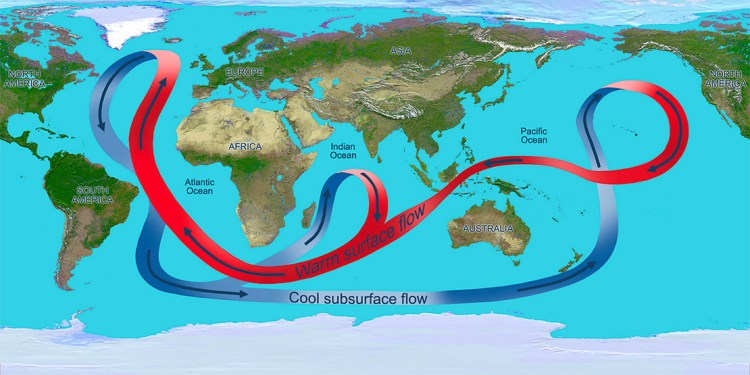
What is the AMOC (Hint: The Gulf Stream is one component of the AMOC, influencing mainly Europe)?
The Atlantic Meridional Overturning Circulation (AMOC) is a system of ocean currents in the Atlantic Ocean. It’s like a conveyor belt that circulates water (and with it, heat and salt) between the Northern and Southern Hemispheres. The circulation consists of a northward flow of warm, salty water in the upper layers of the Atlantic, and a southward flow of cooler, denser water in the deep Atlantic.
This circulation plays a vital role in regulating the climate, particularly in the Northern Hemisphere. The warm upper ocean current helps maintain the mild climate of Western Europe, for example.
The AMOC is driven by differences in temperature and salinity, which affect the density of seawater. The warm, salty water cools and becomes denser as it travels northward, eventually sinking in the North Atlantic. This sinking water then flows back southward at depth.
Potential Destabilization: The shutdown of the AMOC could lead to a warmer South, therefore potentially destabilizing the West Antarctic ice sheet, with as yet unclear further effects on the AMOC.
The document does discuss the role of albedo feedback in the context of climate tipping points. Here are some relevant points:
Albedo Feedback and Arctic Warming (Page 44)
Nonlinear Arctic Feedbacks: The document mentions that nonlinear feedback mechanisms in the Arctic, including permafrost feedback and surface albedo feedback from decreasing sea ice and land snow, lead to additional warming over the entire period in the model.
Economic Impact: Adding the nonlinear effect of permafrost and surface albedo effects on temperatures, the total economic effect of climate change (mitigation costs, adaptation costs, and climate-related economic impacts aggregated until 2300) is increased by USD 24.8 trillion.
Impacts on the Cryosphere: By affecting surface-albedo feedbacks and leading to warming amplification in the Arctic, sea-ice loss is contributing to losses in other components of the cryosphere, including permafrost thaw rates and Arctic ice sheet surface melt. Sea ice loss also has the potential to contribute to Antarctic ice sheet mass loss.
The albedo effect is crucial because it amplifies warming. When ice melts, it reduces the Earth’s albedo, that means Earth’s reflectivity, causing more sunlight to be absorbed by the ocean or land rather than being reflected into space. This leads to further warming and more ice melt in a feedback loop.
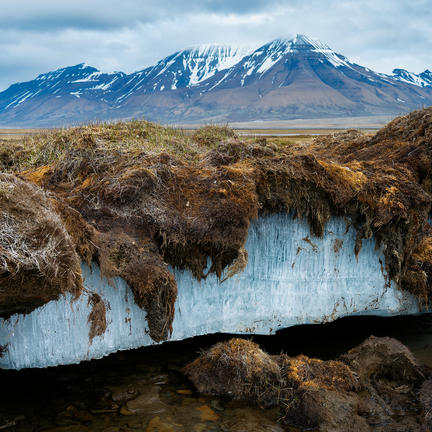
The document provides an in-depth analysis of the Arctic Permafrost, emphasizing its significance as a major tipping element in the Earth’s climate system. Here are some key points:
What is Arctic Permafrost? (Page 34)
Definition: Permafrost refers to perennially frozen soil and rock, both near the surface and in deeper layers, underlying an active layer exposed to seasonal freeze and thaw.
Location: It is primarily located in cold high-latitude and high-altitude areas across the Arctic, accounting for approximately half of the global permafrost surface.
Carbon Storage: The Arctic region stores large amounts of organic carbon within permafrost areas, estimated at 1,700 Gt—almost twice as much as the carbon currently stored in the atmosphere.
Impacts of Thawing (Page 34, 35)
Carbon Release: Thawing permafrost releases carbon dioxide and methane, amplifying surface warming in a process known as the permafrost carbon feedback (PCF).
Human Health: Thawing permafrost poses risks to human health through the release of previously locked-in infectious diseases like anthrax.
Infrastructure: The thawing ground can cause severe damage to infrastructure built above permafrost soil.
Projections and Risks (Page 35)
Volume Decrease: The IPCC projects that the global permafrost volume in the top 3m will decrease by up to 50% at sustained warming levels of 1.5°C to 2°C, 75% at 2 to 3°C, and 90% at 3 to 5°C.
Abrupt Thaw: The potential for abrupt large-scale thaw across the Arctic is still incompletely represented in Earth System Models. Factors like fire-permafrost-carbon interactions and the potential for abrupt release through thermokarst are not currently accounted for.
Ground Instability: The thaw of permafrost and resulting ground instability can cause severe damage to the infrastructure built above permafrost soil.
GHG Emissions: A total collapse of permafrost would release up to 888 Gt of carbon dioxide and 5.3 Gt of methane over this century.
Economic Development and Human Activities: This poses challenges for economic development and human activities in concerned regions.
Mitigation: In the longer term, mitigation to hold global warming well below 2°C would significantly reduce the impacts of permafrost thaw on infrastructure in permafrost areas.
Conclusion as permafrost thaws, the ground becomes less stable, which can lead to structural issues for any infrastructure built on it. This is particularly relevant for cities and towns in high-latitude regions like Siberia, where much of the ground is permafrost.
The Amazon Forest is another critical tipping element in the Earth’s climate system, and the document provides a comprehensive analysis of its current state and the challenges it faces. Here are some key points:
Current State and Thresholds Amazon Forest (Page 33)
Temperature Threshold: The temperature at which Amazon forest dieback could occur, independent of deforestation, has been estimated at 3.5°C (with a range of 2 to 6°C). This threshold is likely lower when factoring in deforestation.
Deforestation: Given the vast scale of past deforestation, even if all deforestation is halted, reforestation will be necessary to ensure the Amazon’s stability, especially when faced with warming conditions.
Impacts of Dieback (Page 33)
Global Consequences: The impacts associated with the dieback of the Amazon forest could be severe and global. The conversion of the Amazon, which comprises half of the world’s current rainforest, into a drier Savannah state would have profound implications for biodiversity.
Local Communities: The dieback would have dire consequences for local communities, particularly indigenous populations, due to diminished levels of biodiversity and food sources, higher exposure to respiratory problems, air pollution, and diseases.
Climate Feedback: The loss of the Amazon forest would act as an amplifying positive feedback on climate change, releasing as much as 200 GtC of carbon currently stored in the forest into the atmosphere.
Additional Factors (Page 68)
Deforestation and Fire: The widespread use of fire to clear vegetation leads to greater vulnerability to fire in subsequent years. Scientists estimate that the Amazon forest is at risk of shifting to a Savannah state at 20-25% of deforestation.
Uncertainties and Projections (Page 33)
Loss of Resilience: There is scientific evidence of a pronounced loss of Amazon resilience since the early 2000s, indicating that the Amazon may be approaching a tipping point.
Future Scenarios: Under a business-as-usual scenario, a potential tipping point could be crossed in the next 20-30 years. At 2.5°C of warming, forest cover would decrease by 60% due to the combined effect of climate change, deforestation, and forest fires.
The document does touch upon about coral reefs, particularly warm-water coral reefs, as part of the broader discussion on climate tipping points. Here are the key points:
Coral Reefs and Climate Change (Page 22)
Mass Bleaching: Ocean ecosystems are already experiencing large-scale changes, and ocean heatwaves and acidification are causing mass bleaching of warm-water coral reefs.
Projected Loss: Above 2°C of global warming, 99% of coral reefs are projected to be lost.
Temperature Thresholds (Page 23)
Low-latitude Coral Reefs Die-off: The document indicates that the temperature threshold for the die-off of low-latitude coral reefs is around 1.5°C, with an uncertainty range of 1-2°C.
Coral reefs are highly sensitive to changes in temperature and water chemistry. The mass bleaching events and the projected loss of nearly all coral reefs with just a 2°C increase in global temperatures underscore the urgency of the situation. (Acidification)
Mass bleaching of coral reefs has far-reaching consequences for both the food chain and coastal protection. Here’s how:
Impact on the Food Chain
Loss of Habitat: Coral reefs serve as habitats for a diverse range of marine species. The loss of coral reefs due to mass bleaching can lead to a decline in fish populations that rely on the reefs for food and shelter.
Disruption of Food Web: The decline in fish populations affects not only the predators that rely on them, but also the local communities that depend on fishing for their livelihoods and sustenance.
Loss of Biodiversity: The extinction of species that are specialized to coral reef environments can lead to a less resilient ecosystem, which is more susceptible to further disturbances.
Impact on Coastal Protection
Erosion Control: Coral reefs act as natural barriers that reduce wave energy and protect coastlines from erosion. The loss of these reefs makes coastal areas more vulnerable to the effects of storms and rising sea levels.
Economic Impact: Coastal communities often rely on coral reefs for tourism. The loss of these natural wonders can have a devastating impact on local economies.
Increased Vulnerability: Without the protective barrier of the coral reefs, coastal habitats like mangroves and seagrass beds are also at risk, further exacerbating the problem.
And finally, the list of mitigation to counter the tipping effects:
The paper emphasizes the need for near-term policy measures to address climate tipping points.
Countries are urged to align their pledges with the Paris Agreement’s temperature targets.
A focus is placed on rapid and deep emissions reductions within this decade.
The mitigation of greenhouse gas (GHG) emissions is considered the most direct way to reduce global temperature increases.
The document notes that mitigation efforts have improved since 2009 but still fall short.
Risk management strategies are crucial for dealing with low-likelihood but high-impact outcomes like tipping points.
Current policy has largely ignored these high-impact risks, focusing instead on higher-probability, lower-impact outcomes.
The paper advocates for risk governance processes that involve continuous monitoring, evaluation, and learning.
Three key components guide risk management: characterizing risks, evaluating them, and developing approaches to reduce them.
Technology plays a crucial role in both mitigation and adaptation policies.
The paper discusses net-zero transition strategies to mitigate climate risks.
Building resilience to potential impacts of tipping points is also emphasized.
Technological approaches for monitoring tipping elements are considered vital.
Adaptation efforts are deemed insufficient and need to be ramped up.
Transformational adaptation is highlighted as a way to reduce the risks of climate tipping points.
The paper stresses the importance of measuring progress on adaptation.
Dealing with scientific uncertainty is considered crucial when developing adaptation strategies.
Mitigation and adaptation are seen as closely linked and should be integrated into broader sustainable development goals.
Climate action can lead to synergies with sustainable development, such as improved energy efficiency.
The use of renewable energy is encouraged.
Reduction of air pollution is seen as a co-benefit of climate action.
Balanced, healthier diets are promoted as part of sustainable development.
Reforestation and forest conservation are considered key mitigation strategies.
Avoided deforestation is also highlighted.
Technological approaches to monitoring tipping elements are considered important.
The paper concludes that the window of opportunity for effective mitigation is closing swiftly, urging immediate action.
That was really a lot of bad news. Take a rest and get some energy for the last chapter: conclusion.
Conclusion
Audio to this chapter:
Optimally, humanity should strive to achieve the RCP 2.6 scenario. RCP stands for Representative Concentration Pathway, and the ‘2.6’ represents an additional 2.6 Watts per square meter of Earth’s surface radiating back into space, compared to preindustrial levels. Such an increase would result in a global temperature rise of less than 2°C, which is crucial for avoiding catastrophic tipping points.
As it stands, we’ve already witnessed an increment of 2 Watts per square meter, correlating to a 1.2°C rise in global temperatures. The Intergovernmental Panel on Climate Change (IPCC) suggests that under RCP 2.6, we could achieve net-zero emissions around 2070, thus limiting the global temperature rise to below 2°C. This is in line with the aims of the 2015 Paris Agreement, which ideally seeks to limit warming to 1.5°C.
These are the scenarios of the CO2 global emissions during the 21st century, that the IPCC (Intergovernmental Panel on Climate Change) follows up.
Regrettably, our current trajectory points toward RCP 3.4, translating to a temperature increase between 2-2.4°C. This scenario significantly raises the risk of hitting dangerous climate tipping points, which could unleash a cascade of irreversible changes.
The path forward is not as complex as it might appear. The first step is acknowledging the existential threat that climate change poses—not just in distant lands but everywhere, including affluent nations like Germany. While you may not directly face the immediate impacts of floods or droughts as drastically as in the Global South, disruptions in food supply, economic instability, and increased migration will create ripple effects that are impossible to ignore.
There’s no room for complacency or panic. Earth is our only home; there is no Planet B. We are responsible for steering our planet away from the brink of irreversible change. To that end, it is essential that you take personal action to reduce your carbon footprint and engage in the political process to influence policy towards achieving net-zero emissions.
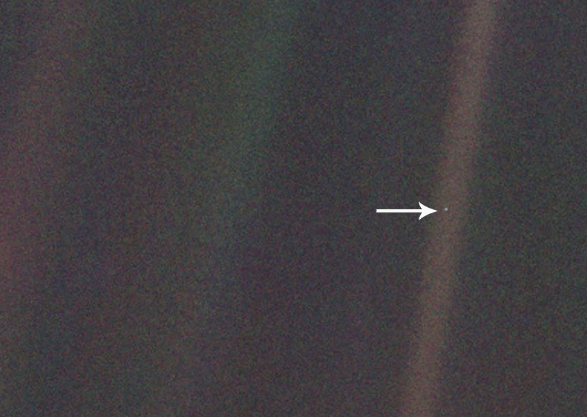
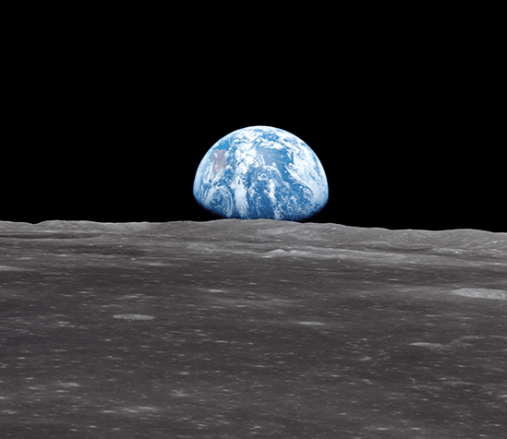
Captured from six billion miles away by Voyager 1 in 1990, Earth appears as a minuscule dot in the immense expanse of the cosmos—a precious, fragile bubble of life that we are obligated to preserve for as long as possible.
You may be skeptical about the feasibility of halving CO2emissions within the next 15 years. However, with renewable energy technologies advancing at an unprecedented rate, a collective effort can make all the difference. Each individual, armed with will and ambition, can contribute to reducing fossil fuel consumption. While we owe much to fossil fuels for our current quality of life, the time has come to turn the page and embrace a more sustainable future. Let’s show that we are more than just molecules bound by the laws of thermodynamics; let’s fix it soon.










 My blog
One thought on “Tip over=game over?”